Most homeowners start shopping for kitchen cabinets by looking at door styles, but that is the last thing I worry about in the shop. First I want to know how the room works: where the sink sits, how wide the aisles are, whether the fridge door can open without clipping an island, and whether the floor is flat enough to support long runs without a visible gap. If the layout is wrong, nice finishes do not rescue the room. If the box construction is weak, the job starts to fail in the places people touch every day: hinges, drawer fronts, and sink bases.
Start With the Work Triangle and the Trash Can
The best kitchen cabinets begin with traffic patterns and landing space. I want at least 15 inches of clear prep counter beside the range, a trash pull-out close to the cutting area, and a dishwasher that can open without choking the walkway. In a galley or L-shaped room, that might mean giving up one decorative panel so the drawer stack lands where it should. The tradeoff is worth it, because the room feels calmer and the cook moves less.
On older houses, I also check for out-of-square corners, wavy plaster, and floors that slope an inch or more over a long run. Those conditions change the cut list. You can hide a lot with fillers and scribe, but you should know where those pieces are going before the build starts. A good plan anticipates the ugly parts of the room instead of pretending they will disappear.
The Materials That Change the Price Fast
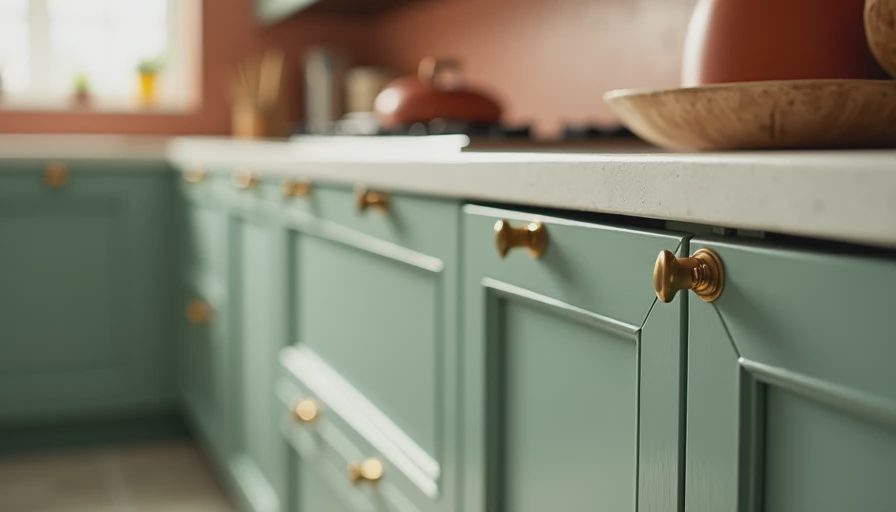
When I price kitchen cabinets, the biggest swing is the box construction. A 3/4-inch plywood box with solid wood stretchers and a hardwood face frame costs more than particleboard, but it handles screw pull-out, moisture near the sink, and repeated removal of drawers much better. For painted work, maple, poplar, and high-grade MDF all have a place. Poplar is stable and friendly to paint. Maple is harder and cleaner on edges. MDF gives the flattest paint surface, but I do not use it where standing water is a regular event.
Hardware matters just as much. Blum and Hettich hinges, full-extension soft-close slides, and decent drawer boxes are not luxuries at this level; they are the reason a cabinet still feels solid after ten years of dishware, groceries, and kids leaning on the doors. I would rather save money on ornate panels than on the moving parts. A plain box with good hardware beats a fancy door hung on weak components every time.
Finish, Hardware, and Daily Wear
Finish is where a lot of visible quality lives. A factory conversion varnish or UV-cured finish usually resists wear better than a site finish sprayed in a dusty room, especially around dishwashers, sinks, and the toe kick. Painted surfaces expose sanding scratches, glue squeeze-out, and bad edge prep immediately. If the primer is thin or the topcoat is rushed, the problem shows up as chipped corners and visible grain telegraphing within a few years.
Stained work asks different questions. Walnut reads rich when the sheen is controlled, while clear maple can look too pale if the stain is trying to fake a deeper species. I also pay attention to pulls and knobs, because hardware is the one thing everyone touches. A $6 pull can do the job, but a better-plated handle with some weight changes the feel of the whole room. That is not vanity; it is daily use.

What a Real Quote Should Show
What a real quote should show is more than a single lump sum. A quote for kitchen cabinets should separate boxes, doors, drawers, finish, hardware, delivery, installation, and any site carpentry needed for crown, toe kicks, or panel scribing. That breakout tells you whether the shop has allowed for the real time it takes to make the room look finished. If the proposal hides all of that in one line item, you do not know what gets cut when the budget tightens.
Ask specifically about fillers, appliance panels, trash pull-outs, spice pull-outs, and soft-close hardware. Those pieces sound small, but they change both the price and the use of the room. Two shops can be within a few thousand dollars and still be talking about very different products. The clearer quote is usually the better one, because you can compare labor to labor and finish to finish instead of guessing what disappeared from the first number.
Stock, Semi-Custom, and Full Custom
Stock kitchen cabinets can make sense for a rental, a tight timeline, or a room with standard dimensions and very little trim work. Semi-custom adds more size options, better finish choices, and sometimes better drawer components, which helps when your room is close to standard but not quite there. Full custom earns its keep when the ceiling is low, the walls are off plane, or the homeowner wants integrated appliance panels and a continuous run that looks built into the architecture.
The price gap is real. A basic stock project might land in the low thousands while a fully custom room can move into the tens of thousands once finish work, installation, and accessories are included. That does not mean custom is always the answer. It means you should spend where the room will punish shortcuts: around sinks, near heat, and anywhere a bad fit will be visible every day.
A Small Kitchen Story That Explains the Math
I remember a 1940s house where the owner wanted more storage without making the room feel crowded. The old plan had too many small doors and not enough useful drawer space. We kept one tall pantry, one drawer bank near the range, and one shallow run for coffee gear and appliances. By changing the depth and reducing dead corners, the room stored more and looked calmer at the same time.
That is the part many people miss: the right cabinet plan is not about maximizing boxes; it is about giving each inch a job. If your kitchen cabinets are fighting the room, start with layout, then material, then finish. Get those three right and you turn a complicated build into a straightforward purchase. Get them wrong and you will keep paying for the same mistake every time a door drags or a drawer sticks.




No comments yet — grab the first one.