Gray kitchen cabinets are still one of the safest bets in a remodel, but the finish only works when the undertone, sheen, and surrounding materials are chosen like a system. I see them look expensive in one house and flat in the next because of daylight, flooring, and hardware, not because gray is somehow better or worse than white. If you are planning a kitchen, the real question is which gray will hold up with your counters, backsplash, and trim.
Why gray kitchen cabinets work in real houses
Gray kitchen cabinets earn their place because they sit between warm and cool. That makes them easier to pair with oak floors, honed stone, black fixtures, stainless appliances, or a painted island in a second color. In an open-plan home, that flexibility matters more than whatever is trending on Instagram this month.
They also hide everyday wear better than pure white. A handprint on a satin gray door is less obvious than the same mark on a bright cabinet face, and tiny scuffs near the trash pull do not jump out as fast. That said, the wrong gray can still look dead. If the room is dim and the cabinet color leans too blue or too brown, the whole kitchen starts to feel heavy instead of calm.
For a lot of homes, gray kitchen cabinets work best when the room has one warm anchor and one crisp anchor. Think white oak or walnut on the floor, then a clean quartz counter with a little movement in it. That keeps the cabinets from floating in space. If the only materials in the room are cool gray, chrome, and white tile, the space can feel thin. Add texture somewhere else and the cabinet finish starts to make sense.
The undertone test that keeps gray from looking muddy
The mistake I see most often is choosing a swatch under store lights and never testing it in the room. A gray that looks balanced under LED showroom lighting can turn green next to a west-facing window or purple beside a blue-gray backsplash. This is where sample doors matter more than chips. Put the sample upright, next to the floor, the counter mockup, and the wall color, then look at it morning, noon, and late afternoon.
I like to compare at least three sample boards: one warm gray, one true neutral, and one cooler gray. If all three look good in the same room, you are close. If one starts to read beige and another reads blue, you have learned something useful before spending five figures on paint and labor. Benjamin Moore Stonington Gray, Coventry Gray, and Revere Pewter all behave differently once daylight hits them, and the room decides which one wins.
Painted maple, MDF, or veneer?
If you want a painted cabinet, the core matters more than most people expect. For shaker doors and face frames, paint-grade hard maple is a solid choice because it machines cleanly and holds edges better than cheap softwood. MDF is stable for flat panels and center panels because it does not telegraph grain, but it needs good protection on exposed edges. For slab fronts or veneer panels, a quality veneer over stable substrate can give you a crisp, modern look without the cost of solid stock everywhere.
In a real shop, I think about where the abuse happens. Lower doors near the dishwasher get kicked, bumped, and steamed up. Drawers under the sink deal with more moisture. If you are spending money anywhere, spend it on the carcass, drawer boxes, and finish system before you chase a fancier door profile. A sprayed waterborne conversion varnish or a tough two-part finish is usually worth it because it levels well and resists kitchen cleanup better than a rushed brush job.
Hardware, sheen, and maintenance
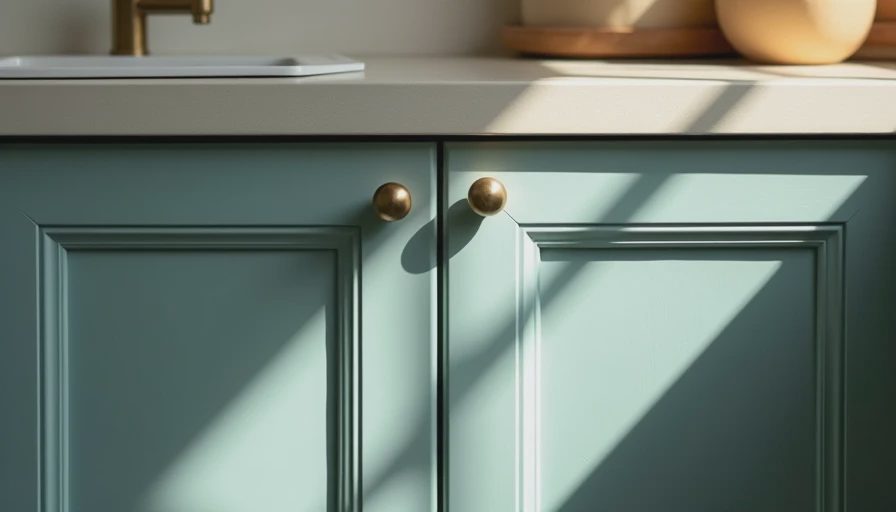
Hardware changes the whole read of the room. Slim bar pulls in brushed nickel make gray feel cooler and more tailored. Matte black adds contrast and works well when the cabinets need a little edge. Unlacquered brass or aged brass warms things up and keeps the space from feeling too severe. If the cabinet color is a soft neutral gray, I usually prefer a simpler pull shape so the room does not get busy.
Sheen matters just as much. Flat paint on cabinets is a mistake unless you enjoy touching up grease spots. High gloss can look sharp in a modern house, but it shows every ripple, especially on large slab doors. Satin or low-luster is the sweet spot for most kitchens because it reflects enough light to keep the finish alive without turning every fingerprint into a display item.
Maintenance is straightforward if the finish is built right. Use a damp microfiber cloth and mild soap, not abrasive cleaners. Around the sink and range, wipe spills the same day. That is true for any painted finish, but gray kitchen cabinets make the routine less stressful because normal wear blends in better than it does on a bright white door.
What gray cabinets cost
The price swings come from construction and finish quality, not the color itself. A paint-grade semi-custom kitchen with factory-finished gray doors might land in the low five figures, while a fully custom shop-built version can move well beyond that once you add inset doors, full-height pantries, and custom storage. On a typical project, the cabinet box design, hardware spec, and finish schedule have a bigger effect on cost than the choice of gray kitchen cabinets.
If budget is tight, I would rather simplify the door style and upgrade the finish than do the reverse. A clean shaker door in maple with a good sprayed finish will usually age better than a fancy profile with weak hardware and thin paint. If you have room in the budget, put money into soft-close hinges, full-extension drawer slides, and better drawer boxes. Those are the parts you touch every day.
When I would not use gray
I would skip gray in a kitchen that already has cold light, pale floors, polished chrome, and almost no natural texture. In that setup, the room can feel like a conference center instead of a place to cook. I would also hesitate if the homeowner wants a very rustic look. In that case, stained wood or a warmer painted color may work better with the rest of the house.
That is really the point: gray kitchen cabinets are not a style by themselves. They are a tool. Used with the right undertone, the right sheen, and the right materials around them, they look deliberate and calm. Used without a plan, they look like a safe choice that never quite found its footing.




No comments yet — grab the first one.