Shaker cabinets are the kind of design people keep coming back to because the parts are honest: square rails, a flat center panel, and no extra carving to date the room. In a house with mixed trim, old floors, or a kitchen that has to sit next to a later addition, that restraint helps. The profile can lean classic with inset doors and a painted finish, or more current with wider rails and a cleaner edge. The real question is not whether the style looks good. It is how the doors are built, what the boxes are made from, and whether the reveals stay even when the afternoon light hits the run.
Why shaker cabinets still fit real homes
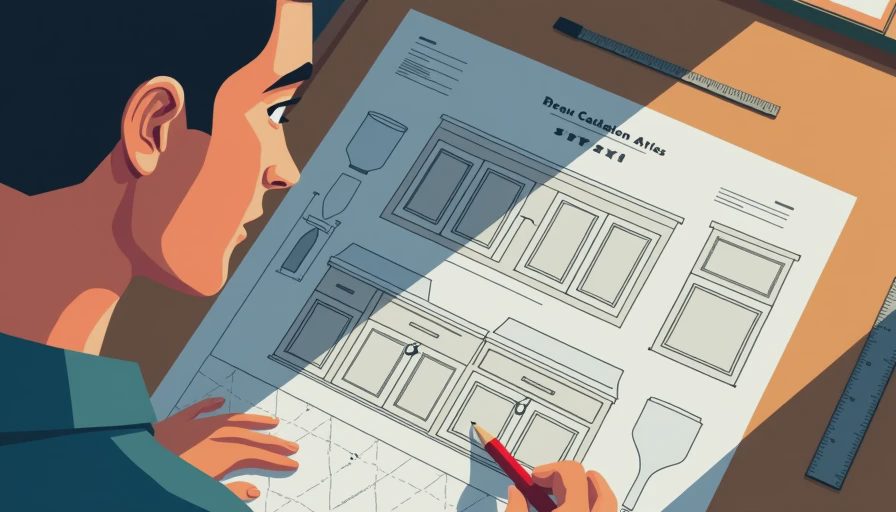
The reason this profile survives trend cycles is simple: it solves a proportion problem. A flat center panel and square stiles let the door read as part of the architecture instead of floating above it. In a room with standard 8-foot ceilings, that matters. You can make the doors feel lighter with a slimmer rail, or more substantial with a thicker frame if the house needs visual weight. I often sketch both versions on the same elevation because the difference is clearer on paper than in a showroom.
They also work across rooms without feeling repetitive. A kitchen can take the same language as a mudroom bench, a bath vanity, or a hall built-in, then shift the scale. Wider drawers in the kitchen, taller doors in a linen closet, a deeper toe kick where boots live. That flexibility is why homeowners who started with one room end up asking for a whole-house plan. The style is calm enough to repeat, but not so plain that it disappears.
The build details that separate good from cheap
On painted shaker cabinets, I prefer a paint-grade maple face frame or a stable MDF front with a separate center panel, depending on the finish and the room. Solid wood panels move seasonally, and in a wide door that movement can telegraph through the paint as a ridge or a crack. For boxes, 3/4-inch plywood is the baseline I trust. Birch plywood is common, and prefinished panels save time in closets or utility rooms. For drawer boxes, Baltic birch or prefinished birch plywood will outlast the particleboard you still see in low-cost packages.
Hardware matters more than most people expect. A good concealed hinge from Blum or Salice gives you six-way adjustment, which makes alignment possible after the doors are hung. Soft-close drawer slides are standard now, but the better undermount systems feel smoother under a full load of plates or canned goods. If you are doing inset doors, the tolerances tighten fast. That is where labor goes up, because every gap has to be controlled from the start instead of hidden by overlay.
Where the style earns its keep room by room
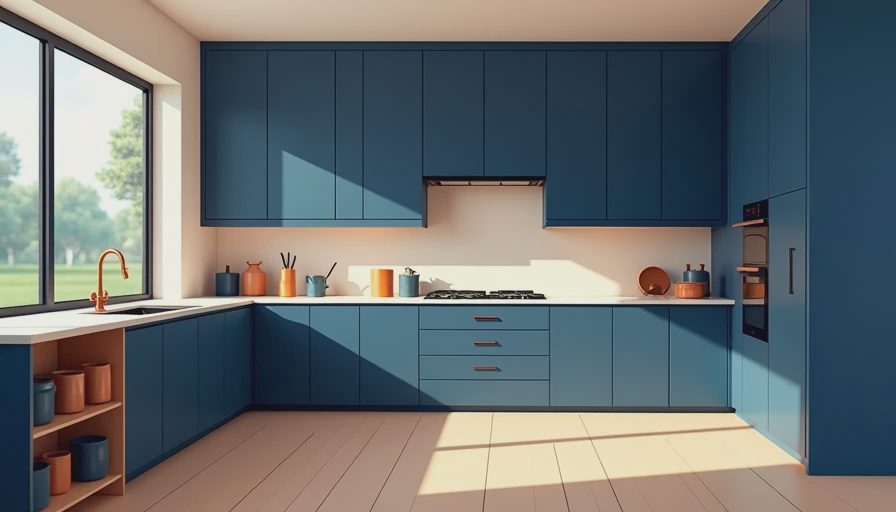
In a kitchen, the clean face lets stone, tile, and lighting do more of the talking. That is useful when you have a bold quartzite slab or a backsplash with a lot of movement. In a pantry, the same profile keeps the room from feeling busy even when you line the walls with tall storage and appliance garages. A mudroom gets a different treatment: tougher finishes, more scuff resistance, and drawers sized for gloves, dog leashes, or charging cords instead of dinnerware.
Bathrooms are where scale becomes obvious. A vanity that feels right in a 12-by-14-foot primary bath can look too formal in a powder room, so I often narrow the rails a bit and simplify the toe kick. In a home office, the style works best when the storage is broken into books, printers, and closed file drawers, not one long wall of identical doors. The door language stays the same, but the function changes from room to room. That is the point of a whole-house plan.
What shaker cabinets cost in the real world
Cost is where style turns into trade-offs. Semi-custom packages from brands like KraftMaid or Wellborn often land in a lower installed range than fully custom work, especially if you stay with standard sizes and a paint finish. Fully custom can run much higher because you are paying for layout changes, one-off sizes, better plywood, more finishing labor, and the time it takes to fit the room instead of forcing the room to fit the product. As a rough planning range, I tell homeowners to expect a few hundred dollars per linear foot for good semi-custom and more than that when the project shifts into custom joinery, inset doors, or specialty storage.
The expensive parts are not always obvious on the quote. Paint adds labor because every surface has to be sanded, primed, and sprayed cleanly. Inset doors add labor because reveals have to be more exact. Roll-out trays, pantry pullouts, and trash systems sound small until you multiply them across a kitchen. The easiest way to keep the budget sane is to spend on the parts you touch every day and simplify the parts you only notice once a year.
The two mistakes I see most often
The first mistake is choosing a finish before the construction is settled. A bright white sprayed over a poor substrate will show dents, joint lines, and seasonal movement faster than a deeper color with a little more body. The second mistake is chasing decoration when the room needs proportion. If the doors are too narrow, the rails too wide, or the layout too chopped up, no amount of trim will fix it. Start with the box sizes, the door schedule, and the clearances around appliances, then decide how much profile the room can carry.
If you want shaker cabinets that still look calm after the first holiday dinner, the first wet umbrella, and a few years of use, spend your money on stable materials, accurate fit, and good hardware. That is the difference between a room that photographs well and one that keeps working when the house is lived in every day.




No comments yet — grab the first one.