The Small Omissions That Haunt a Built-In
A built-in looks flawless on install day. Six months later, the homeowner has run an extension cord across the pantry floor, the broom lives against the refrigerator because the closet is an inch too shallow, and the holiday decorations are stacked in the guest room because nobody planned where they'd go. These aren't design failures — they're planning gaps that nobody thought to bring up during programming. After 120 projects, I can list the five things almost every client forgets, and the fixes that cost far less than a post-install retrofit.
Outlets Inside Cabinets
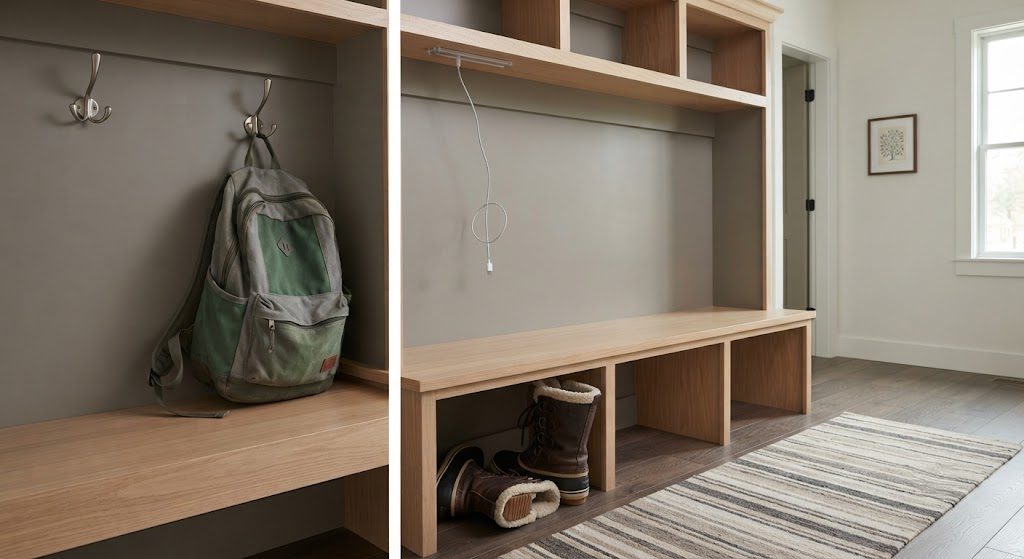
The number one callback to our shop, by a wide margin, is a request to add power to a closed cabinet. A client designs a beautiful appliance garage, installs it, then realizes the blender and the cordless vacuum charger need to be plugged in somewhere. The cabinet door closes, the dead appliances sit inside, and the charging station ends up on the counter anyway.
The fix is simple and costs about $120 per outlet during construction. Specify a recessed outlet inside every closed cabinet that will hold electronics — the pantry appliance shelf, the mudroom charging drawer, the bathroom vanity cabinet for an electric toothbrush and hair dryer, the home office base cabinet for a printer. Code requires outlets inside cabinets to be inaccessible when the door is closed, which is exactly the point. A charging drawer in the mudroom with a built-in power strip means every device gets plugged in at night behind a closed door, and no cord touches the floor.
Cookbook Shelf Depth
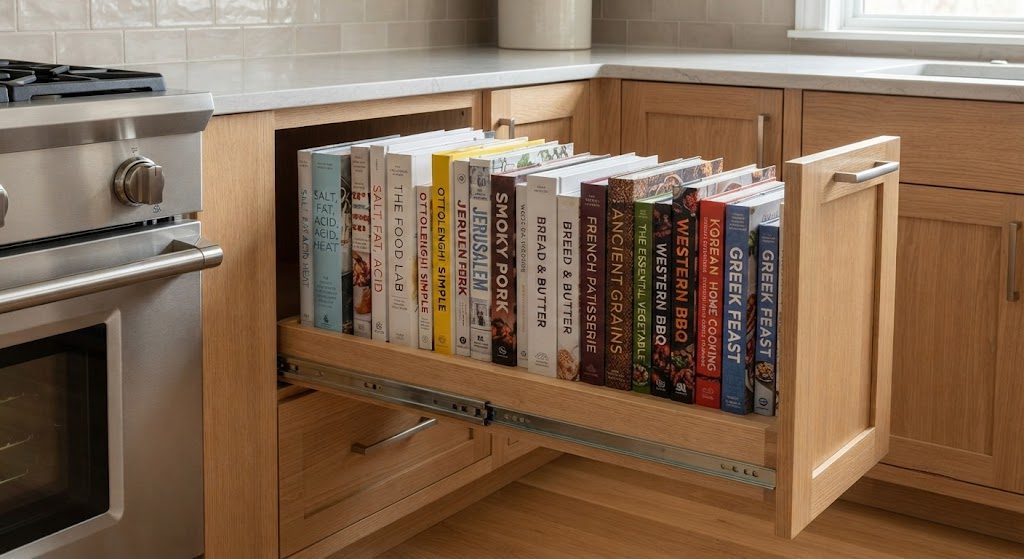
A standard shelf is 10 to 12 inches deep. A standard cookbook is 8 to 9 inches wide and 10 to 11 inches tall. On paper, it fits. In reality, a cookbook on a 10-inch shelf has 2 inches of clearance before the spine hangs over the edge. That's not enough. The book tips forward, the pages sag, and within a month the cookbook collection migrates to a kitchen counter where it's supposed to be temporary but becomes permanent.
A dedicated cookbook shelf should be 14 inches deep minimum. Better, build it as a pull-out shelf at counter height — 14 inches deep, 12 inches tall, rated for the weight of a dozen hardcover cookbooks — and locate it immediately adjacent to the primary prep zone. The cook stands at the counter, reaches to the side, and pulls the shelf out to access any book without lifting it. When they're done, the shelf pushes back flush. Leo Chase's kitchen has exactly this pull-out next to the range. His wife told me three months in that it's the only reason her cookbooks haven't colonized the island.
Broom Closet Height
A broom, mop, and vacuum cleaner need vertical storage. The standard broom is 52 to 54 inches tall. A stick vacuum with the handle attached is closer to 48 inches. The average reach-in closet has a 72-inch opening, which seems generous until you realize a broom leaning against the back wall blocks access to everything else and falls over every time you open the door.
A dedicated broom closet needs a clear interior height of 60 inches and a depth of 8 inches minimum, with hooks mounted along the back wall at staggered heights to hold a broom, a mop, a dustpan, and a Swiffer. If the closet is only 6 inches deep, the broom has to lay flat, which wastes the entire width. Specify the broom closet during framing, not cabinetry installation. A 60-inch-tall cabinet with full-height doors, mounted next to the pantry or in the mudroom, keeps cleaning tools visible, accessible, and off the kitchen wall.
Pet Food Stations
A 40-pound bag of dog food is 26 inches tall, 16 inches wide, and 10 inches deep. It does not fit in a standard base cabinet. It does not fit on a pantry shelf unless that shelf is on full-extension slides rated for heavy weight. Most clients forget to plan for pet food storage entirely, and the bag ends up in the laundry room or garage — miles from the dog bowl in the kitchen.
A pull-out bin cabinet solves this. Build a base cabinet with a 24-inch-wide, full-extension rollout holding a 50-quart stainless steel bin. The bin holds a full bag of kibble, slides out for scooping, and slides back in behind a closed door. Locate it directly adjacent to the pet bowl station, which should be a recessed toe-kick drawer or a dedicated shelf near the back door. The food stays sealed, accessible, and invisible. For cat owners, a matching upper cabinet holds litter and a scooper in a separate sealed bin.
Holiday Decor Storage
The Christmas decorations, the menorah, the Halloween skeleton, the Easter baskets — they come out once a year and consume three times the storage space anyone estimates. Most houses shove them into attic crawl spaces or the back of a guest room closet. Both options are terrible. The attic is inaccessible for half the year and the closet is now unusable for actual guests.
A single tall cabinet in the garage or mudroom, 36 inches wide and 24 inches deep, with four adjustable shelves and doors that close, solves the problem permanently. Labeled bins on each shelf keep the holidays separated without letting them colonize living space. The cabinet costs roughly $2,200 and eliminates the annual attic ladder hazard. Every client who has built one has told me the same thing: they wish they'd done it five years earlier.



No comments yet — grab the first one.