The Six-Month Slide
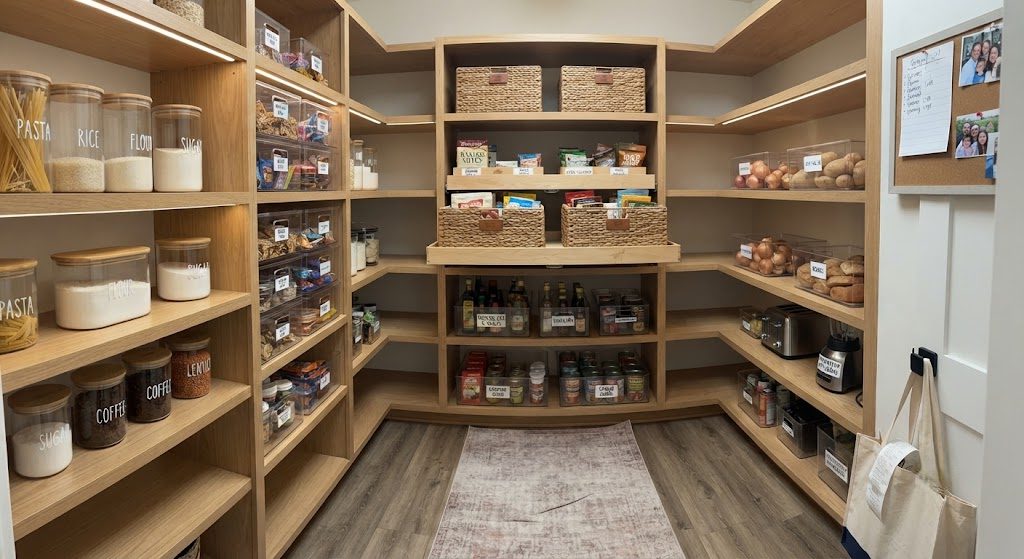
I've walked back into dozens of projects six months after install. The cabinets are still beautiful. The organization is wrecked. The pantry shelf meant for dry goods has accumulated a waffle iron, three reusable water bottles, and a stack of junk mail. The mudroom cubby assigned to the youngest kid now holds a single mitten and a dead houseplant. This isn't a failure of design — it's a failure of the first arrangement. Nobody gets the system right on day one because nobody knows yet how they'll actually use the space. The solution is treating the first month as a test run and making a deliberate reset at day 30.
The 30-Day Observation Period
When the cabinets are empty, every shelf and drawer looks like a good idea. Live with them for 30 days before committing to an organization system. During that window, don't buy a single bin, basket, or label maker. Just use the cabinets. Put things where your hand naturally reaches. If you find yourself walking across the kitchen to grab a spatula from the wrong drawer, note it. If the pantry shelf you designated for canned goods ends up holding breakfast cereal because that's where the kids look first, let it happen. Your actual habits are smarter than your design assumptions.
At the end of 30 days, walk through with a notepad and write down every friction point. The coffee mugs migrated to the cabinet nearest the coffee maker. The pet food bag ended up on the floor instead of the pull-out bin. The shoe shelf assigned to boots actually gets used for sneakers. This list is your real organizing brief. Now buy the bins and dividers — and buy them to fit what actually happens, not what you planned.
The Zone Rule: One Activity Per Drawer
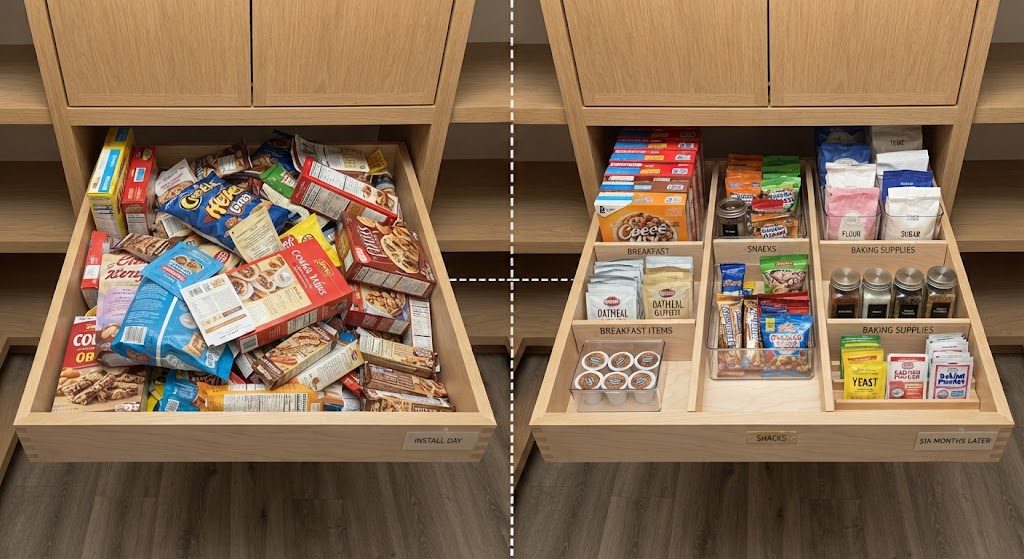
Every drawer and shelf should serve a single activity, not a single category. "Breakfast" is an activity zone: cereal, oatmeal, coffee filters, a box of tea, the toaster if it fits. "Baking" is an activity zone: flour, sugar, measuring cups, vanilla, baking powder. When every tool and ingredient for a task lives in the same drawer or on the same shelf, the task gets faster and the clean-up puts everything back where it came from. Category-based organizing — "all the canned goods together" — sounds logical but scatters the work across four different shelves when you're actually cooking.
The Return-to-Zero Habit
The difference between a built-in that stays organized and one that doesn't is a daily reset habit that takes 90 seconds. At the end of every day, every household member returns three items to their designated zone. Not a full clean-up — just three items. Over a week, that's 21 misplaced objects back where they belong. The habit prevents the slow accumulation of clutter that turns a shoe cubby into a junk drawer over the course of a month.
Seasonal Rotation Without the Dread
Built-ins fail hardest at season boundaries. The mudroom cubby that holds winter gloves in February needs to hold sunscreen and baseball caps by June. If the seasonal swap requires emptying the entire cabinet and starting over, it won't happen. Build the rotation into the design: keep off-season items in labeled bins at the top shelf of the same cabinet, and schedule a 20-minute swap twice a year. The bin for winter accessories goes up, the bin for summer gear comes down, and nothing leaves the cabinet. The system resets without effort.
The built-ins that stay organized aren't the ones with the most expensive containers or the prettiest labels. They're the ones where the organization matches the actual daily rhythm of the household, gets a deliberate reset after the first month, and has a return-to-zero habit attached. Install day is the starting line, not the finish line.



No comments yet — grab the first one.