The Five-Year Mark: Settling and Small Adjustments
Year five is when a house has fully settled into its foundation and the cabinetry has cycled through every seasonal humidity swing a Seattle home can throw at it. The wood has stopped moving, but the doors might not know it yet. This is the adjustment year.
Door Alignment and Hardware Tuning
Humidity cycles cause solid wood doors to expand and contract slightly across their width. After five years, you'll notice a door or two that doesn't close with the same soft thump it used to — it catches the face frame by a millimeter, or the gap between a pair of doors has widened by a sixteenth of an inch. This isn't a defect. It's normal seasonal movement, and the fix is a 30-second adjustment on the three-way hinge cams. If you have Blum Clip-Top hinges, you can do it yourself with a Phillips screwdriver. If you have generic hinges with stripped adjustment cams, you're calling me. The difference in hardware quality shows up most clearly at year five.
Finish Touch-Ups in High-Touch Zones
The first finish wear appears around drawer pulls and cabinet knobs — the places hands touch twice a day with skin oils, lotion residue, and the occasional cooking grease. A paint-grade maple drawer front might show a slight darkening around the handle where the topcoat has thinned. This isn't a refinish job; it's a 20-minute touch-up with a color-matched lacquer pen that every shop can provide. The cabinets that look worst at year five aren't the ones that got used — they're the ones that got cleaned with vinegar or abrasive sponges, which etched the finish permanently.
The Ten-Year Mark: Hardware Fatigue and Finish Fading
Year ten is when parts that move start telling you how well they were made. It's also when the finish tells the truth about UV exposure and cleaning habits.
When Slides and Hinges Give Out
A drawer slide with a nylon roller and no ball bearings will start binding somewhere around year seven. By year ten, it's either failed completely or makes a grinding noise every time you open it. Blum undermount slides rated for 100 pounds will still be running smoothly at year ten, but the soft-close piston may have lost some of its damping action — the drawer closes quietly but no longer with that buttery resistance. The piston is a $12 replaceable cartridge that clips into the slide body, and the fix takes ten minutes per drawer. If you spec'd good hardware at the start, year ten is a minor maintenance stop, not a replacement crisis.
Finish Wear Patterns and Refinishing Decisions
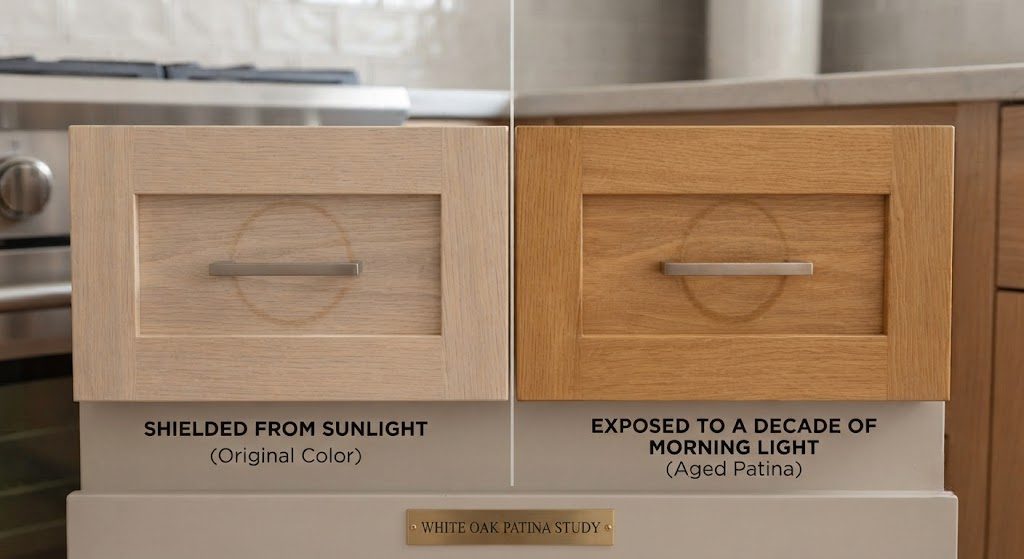
A catalyzed lacquer finish on kitchen cabinets, exposed to ten years of indirect sunlight, will show its age in two ways: a slight yellowing of clear topcoats over light-colored paints, and a gradual loss of sheen on the most handled surfaces. Conversion varnish holds up better — less yellowing, more chemical resistance — but no finish is immortal. At year ten, you're deciding between a light scuff-and-recoat (a one-day job that restores the sheen without stripping) and living with the patina. Most clients choose the patina. The cabinets still look ten times better than a ten-year-old box-store alternative.
The Fifteen-Year Mark: Patina, Plywood, and What Never Fails
Year fifteen is where custom cabinetry separates from everything else. The joinery hasn't moved. The carcase is still square. The only real question is whether you still like the color.
Joinery That Outlasts Everything
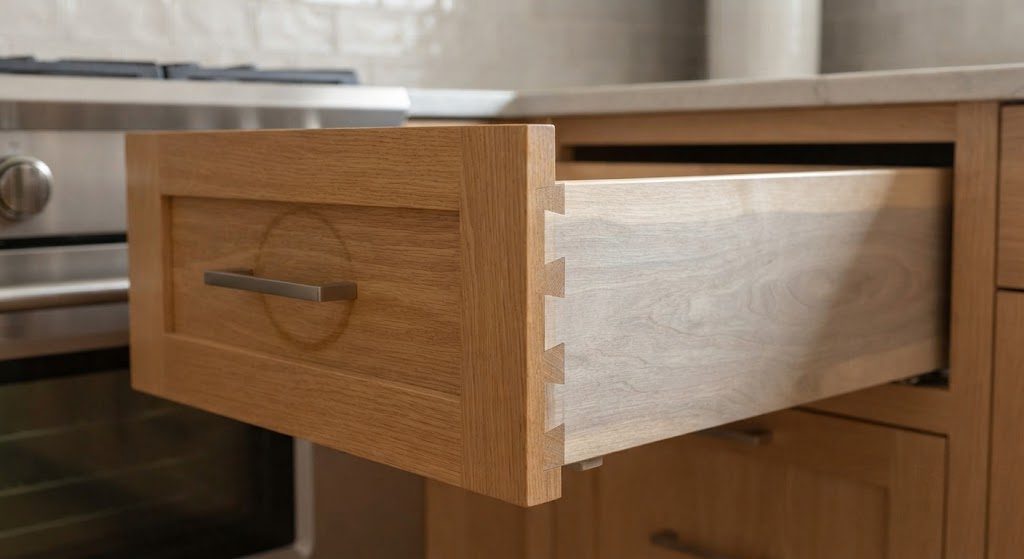
A properly cut dovetail in a solid maple drawer box doesn't loosen over time — it tightens. The glue bond at the pin-and-tail interface is stronger than the wood fibers around it. I've pulled drawers from 20-year-old kitchens that I built as an apprentice, and the dovetails are as tight as the day they came off the jig. The drawer bottom might show a few scuffs from years of sliding cast-iron pans, but the structure is intact. The one thing that never fails is the joinery, because it has no moving parts and no dependence on a mechanical mechanism that can fatigue.
The Cabinet Box at 15 Years: What Holds and What Creaks
A plywood carcase with a quality veneer core, properly dadoed and glued, will be as square at year fifteen as it was at year one. The shelves might show a slight sag if they were overloaded with encyclopedias for a decade, but ¾-inch plywood with a solid wood front edge carries enormous weight without complaint. The only creaks come from neglected hinge screws loosening in their holes — a five-minute fix with a screwdriver. The clients who regret their choices at year fifteen aren't the ones who bought custom cabinetry; they're the ones who painted it a trendy color they hated by year seven. The wood itself is just getting started.


No comments yet — grab the first one.