The Friction Tax You Pay Every Day
Most houses aren’t rectangles. They have chimney bumps, soffit drops, foundation offsets, and walls that wander by a half-inch over eight feet. Off-the-shelf cabinets pretend none of that exists. They arrive in 3-inch width increments, designed for a hypothetical box, not your living room. The result is what I call the friction tax: the small, daily aggravations that eat your time, floor space, and composure — and you pay it every time you walk past a filler strip.
Dead Corners, Wasted Inches
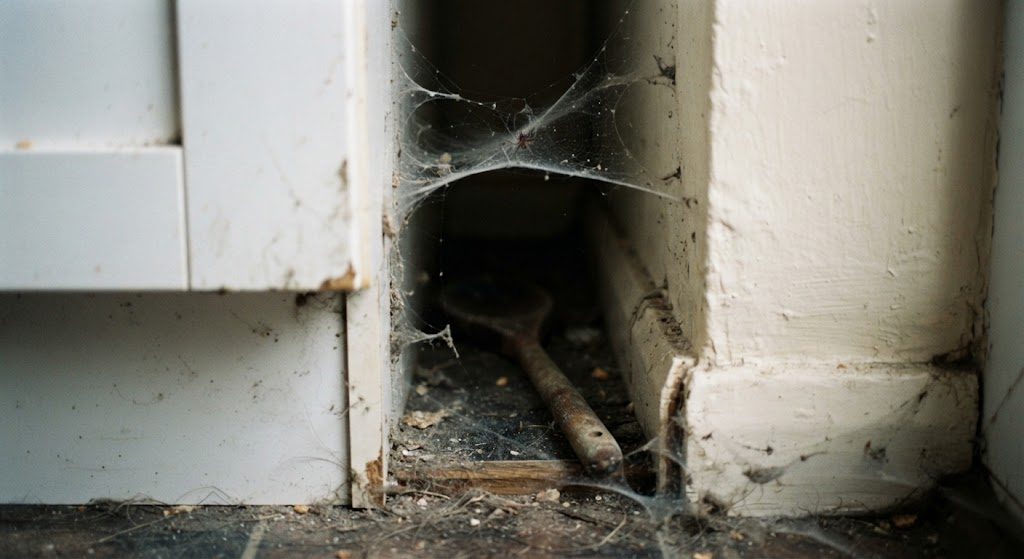
Take a standard kitchen. The refrigerator cavity on the plan reads 36 inches wide, but the rough opening between studs is 36‑1/2 inches. A stock cabinet leaves you with a filler strip — a sliver of scribe molding that hides a 1/2-inch void, collects dust, and does nothing. Multiply that void by every appliance, every wall transition, and every ceiling slope. In a 200-square-foot kitchen, these ghost gaps easily steal 4 to 6 square feet of floor area you paid for but can’t use. Over a decade, you’ll stoop, reach, and shuffle around that dead space thousands of times. That’s the friction tax in action.
When a Cabinet Becomes Architecture
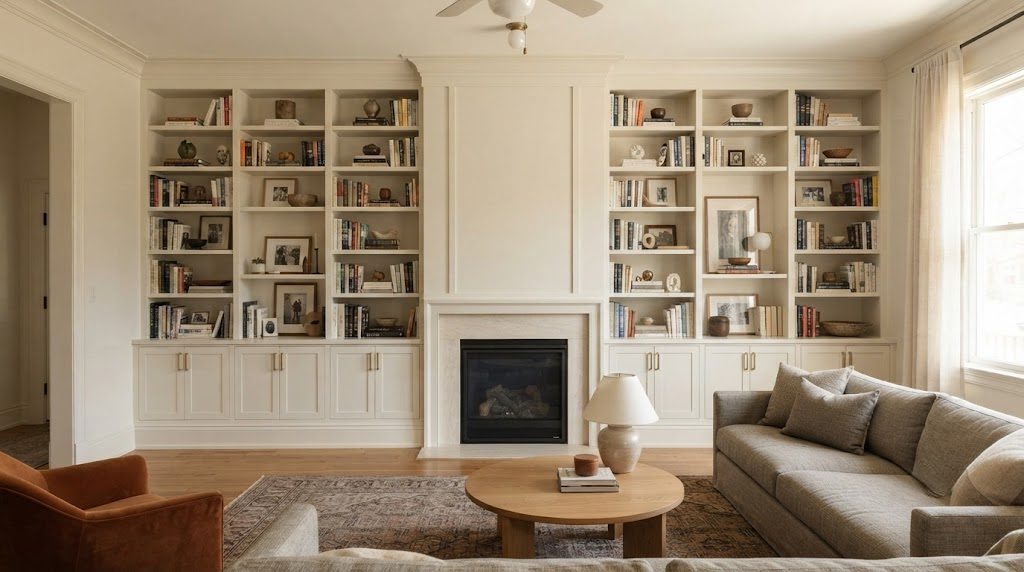
Custom cabinetry reverses the question. Instead of asking, “What cabinet fits this gap?” it asks, “What does this room need to function?” A built-in bookcase that climbs from baseboard to crown molding, wrapping around a window seat, doesn’t just hold books — it defines the room’s proportions. The cabinet stops being a piece of furniture and becomes part of the architecture. That means it can swallow a chimney bump-out, absorb a dead corner beside the fireplace, and turn the entire wall into storage without wasting a cubic inch.
The 25-Year Math
This is where the cost argument gets interesting. A freestanding dresser might run you $2,500 and last seven years before drawers sag and veneer chips. Over 25 years, you buy three or four of them — $7,500 to $10,000 total. A built-in wardrobe of the same storage capacity, built with dovetailed maple drawers and a ¾-inch plywood carcass, costs $6,500 and lasts 25 years without a hitch. You’re not buying cabinets; you’re buying the absence of future furniture purchases. The built-in pays for itself somewhere around year nine, and from then on it’s free storage that actually fits.
Extend that logic across the whole house — a mudroom bench with cubbies that replaces a shoe rack and a coat tree, a bathroom vanity wall that erases the need for a freestanding linen cabinet. Every permanent storage solution subtracts a future furniture line item from your budget. Over the life of the house, the savings compound.



No comments yet — grab the first one.