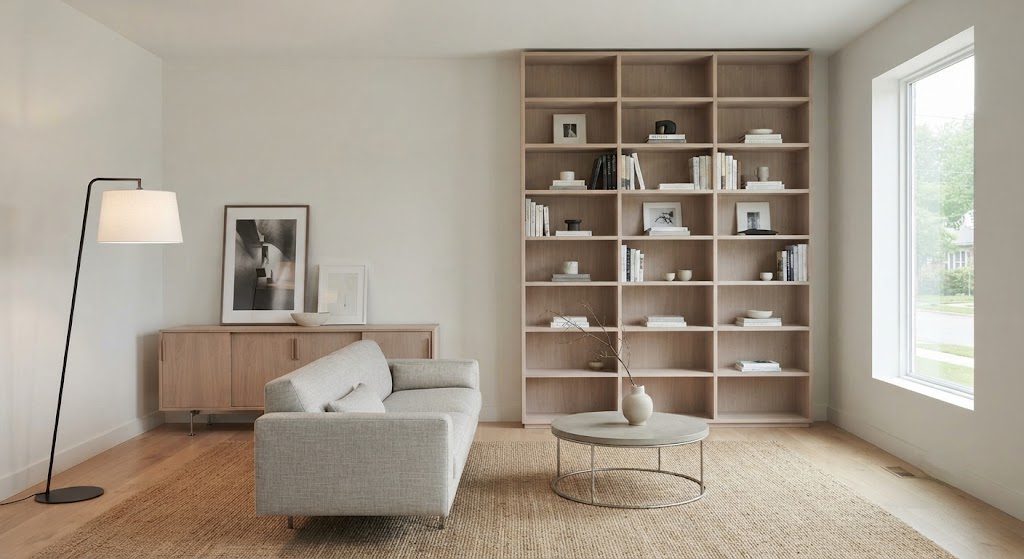
The Question That Flips the Design Brief
Every client walks into the design meeting with a list: a pantry cabinet here, a built-in desk there, floor-to-ceiling bookcases flanking the fireplace. They know exactly what they want. Almost nobody has considered what they shouldn't have. That's why I start every programming session with the same question: "What don't you need built-in?" It's uncomfortable at first — clients expect a cabinetmaker to sell cabinets, not talk them out of them. But after 19 years on the bench and in the shop, I've learned that restraint is the single most profitable decision in a whole-home cabinetry project. The $4,000 figure isn't a guess. It's the average cost of unnecessary built-ins I've erased from client scopes in the last two years alone.
When a Built-In Becomes a Burden
A built-in cabinet is permanent. It fixes the function of a room for decades. If your life changes faster than your millwork, you end up with a beautifully crafted obstruction. The classic mistake is the guest-bedroom built-in desk. It seems logical — a quiet workspace for visiting relatives. But guests don't work on vacation, and within three years that desk is a horizontal surface for unfolded laundry. A $3,200 maple desk with a file drawer and a printer cubby, scribed to the baseboard and tied into the room's trim, becomes the world's most expensive folding table. A $600 freestanding desk could have been moved to the basement, repurposed, or sold in a weekend.
Another trap: the media console sized for today's television. A built-in opening cut precisely for a 55-inch screen guarantees that in seven years, when you upgrade to a 72-inch, the entire cabinet becomes a monument to dead technology. I've removed enough of these to know that media components belong on ventilated, adjustable shelving — never inside a fixed-width carcass.
The Four-Thousand-Dollar Filter
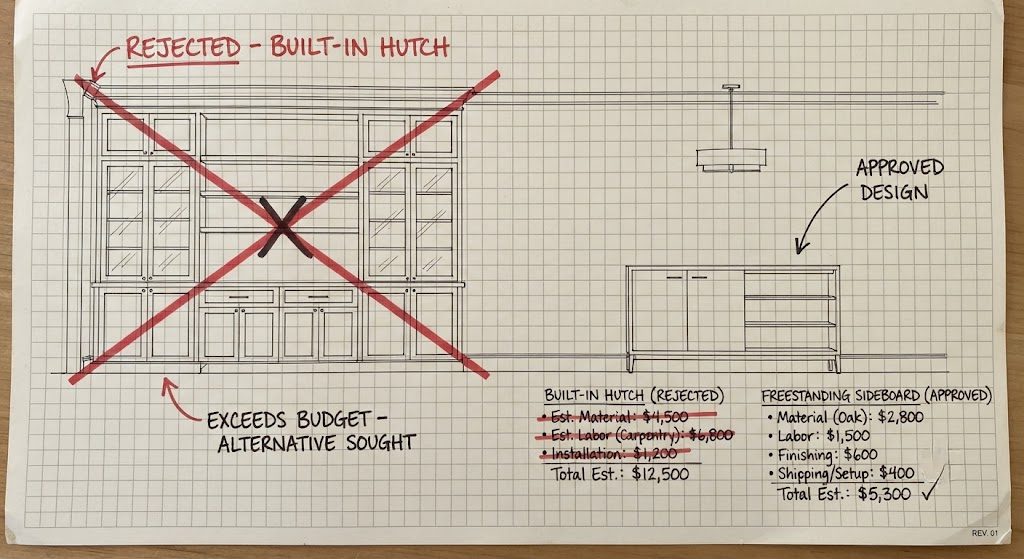
Here's how the question works in a real budget. Last year, a client — let's call him Leo Chase — brought us a scope that included a floor-to-ceiling hutch in the dining room for china and crystal, quoted at $4,200. When I asked Leo how often he used the heirloom china, he paused. "Twice a year. Thanksgiving, maybe Easter." The rest of the time, the dishes sat in a cardboard box in the garage. Leo didn't need a built-in. He needed better box storage. We redirected that $4,200 into deeper, soft-close kitchen drawers and a mudroom bench his two kids use every single day. The dining room got a freestanding cherry sideboard — beautiful, fully functional, and completely movable — for $900. That single question saved Leo $3,300 and preserved a dining room that can become a home office in five years without a sledgehammer.
The filter works because it runs counter to the instinct to fill every alcove. Apply it room by room. A laundry room needs a folding counter, but does it need a wall of upper cabinets for detergent you buy in bulk twice a year? A child's bedroom benefits more from a reconfigurable closet system than a built-in desk at kindergarten height that will be useless by middle school. Every "no" shaves material, labor, and decades of inflexibility.
The Math of Restraint
Not building something isn't just free — it's profitable. The $4,000 you don't spend on a dining hutch becomes budget for drawers that slide like silk, or simply stays in your bank account. When you approach a whole-home project, make a list of every room and write down what you definitely don't want nailed to the floor. That list will be shorter than you think. And it will be the best money you never spent.



No comments yet — grab the first one.