The Two-Year Regret Window
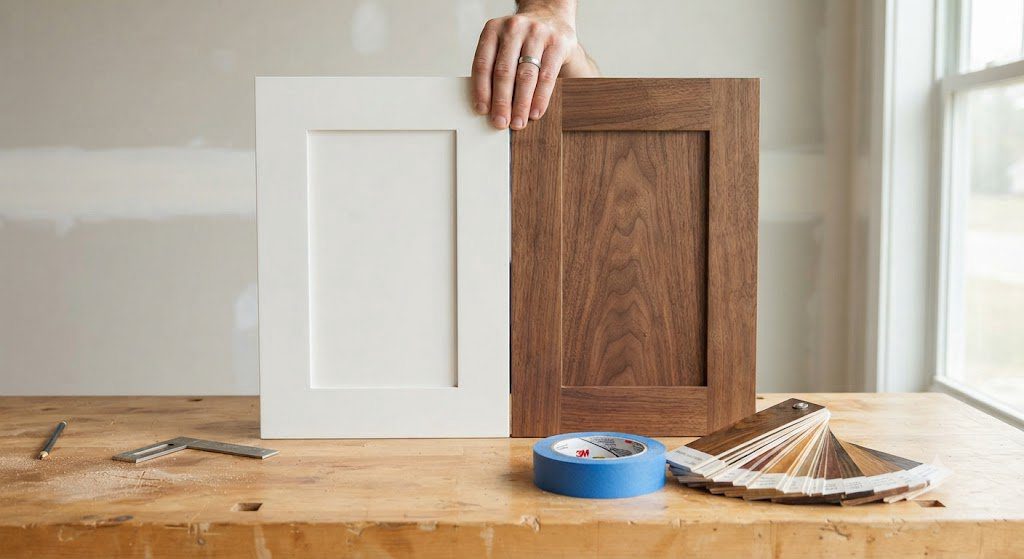
Paint-grade and stain-grade are decisions that live in your house long after the design meetings fade. Paint-grade means the wood will be covered with an opaque finish, usually a catalyzed lacquer or conversion varnish. Stain-grade means the wood gets a transparent or semi-transparent toner that highlights its grain. The mistake I see most often? Choosing stain-grade for a room flooded with afternoon sun, or paint-grade for a pantry door that gets kicked by a toddler every day. Knowing which grade to use — and which wood to specify — saves you from a cabinet that looks worse at year two than it did at install.
Paint-Grade: The Canvas, Not the Painting
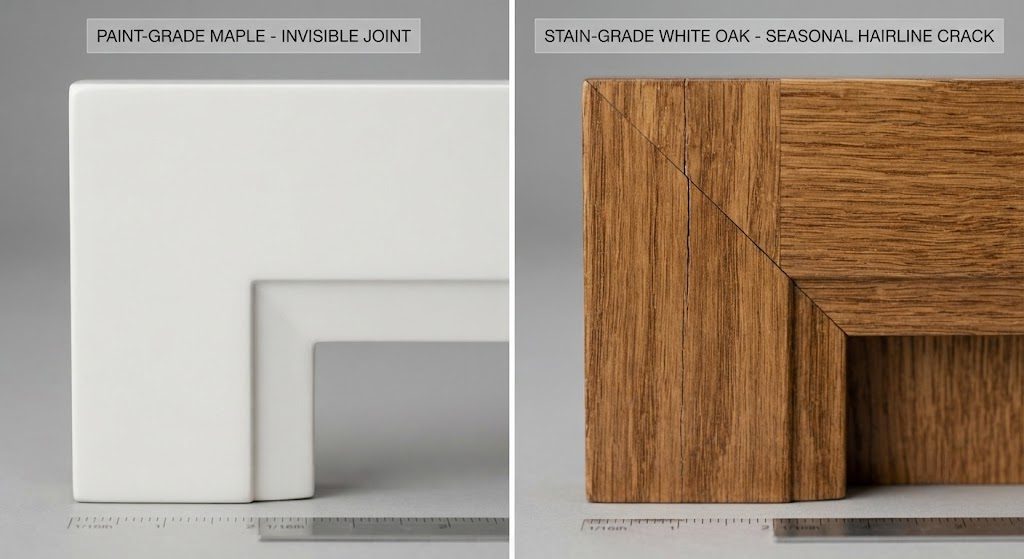
Paint-grade cabinetry relies on one thing: a dead-flat, grain-free surface. If you can see or feel the grain through the finish, the paint job has failed. Maple is the workhorse here. It’s hard, takes a routed profile cleanly, and has a tight, almost invisible grain that doesn’t telegraph through multiple coats. For the center panel of a Shaker door, shops often use an MDF panel with a solid maple frame — the MDF gives absolute flatness, and the maple frame resists dings. Paint-grade maple costs less than walnut or white oak, and when you want cabinets to match an existing trim profile painted in Benjamin Moore Simply White, nothing else blends as seamlessly.
The trade-off is repair. A deep scratch on a painted door exposes raw wood and requires a full refinish to hide. In a low-abuse environment — a formal dining room, a master bathroom — paint-grade holds up beautifully. In a kid’s mudroom locker, expect to touch up chips yearly.
Stain-Grade: The Wood Is the Finish
Stain-grade flips the logic. The wood’s color and grain are the star, so you choose species for figure and durability. Alder is the budget-friendly option: it stains evenly to mimic cherry or walnut, costs roughly 20% less than walnut, and machines well. But alder is soft; a fingernail can dent an alder door, and it won’t take the abuse a maple door will shrug off. Walnut delivers deep, chocolate browns and a natural luster that improves with age, but it’s expensive — typically 50% to 70% more than paint-grade maple. Rift-sawn white oak is the premium choice: straight, vertical grain with no cathedrals, incredible stability, and a price tag to match. It’s the wood you spec when you want cabinets to look like heirloom furniture and you’ve budgeted for it.
The critical step with stain-grade is matching your house’s existing trim and flooring. A stained alder door next to oak baseboards will never look intentional. Bring a sample of your floor and a cut-off of your door casing to the finish shop and have them spray a step panel — one board that shows the full stain-to-topcoat sequence under your actual light. Leo Chase skipped this step on a bathroom vanity, specifying stained walnut based on a showroom sample. Under the LED cans of his own bathroom, the walnut pulled orange, clashing with the gray ash floor. Refinishing cost him $900 and a week without a sink.
The Trim-Matching Litmus Test
The decision usually comes down to one question: do you want the cabinets to recede or stand out? Painted cabinets match trim and blend into the architecture. Stained cabinets become a focal point. If you have an open-plan house with stained oak floors and painted white trim, a painted kitchen island and stained perimeter cabinets can bridge both worlds — but only if the stain species matches the floor species, not just the color. A walnut cabinet stained to look like oak still reads as walnut up close. Know your woods, and know what you’ll tolerate staring at for the next two decades.

No comments yet — grab the first one.