The Appraisal Problem
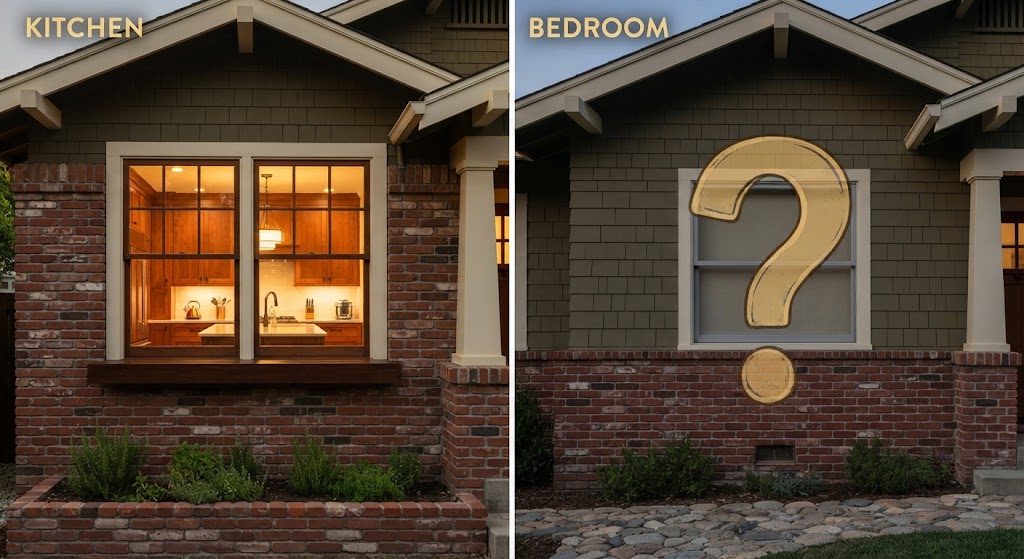
Custom cabinetry suffers from a valuation gap. You live with the dovetailed drawers and the soft-close slides every day; an appraiser walks through in twenty minutes and checks boxes on a form. The appraisal report doesn't have a line for "quality of joinery." It has lines for square footage, room count, and whether the kitchen has been updated. That mismatch between what you paid for and what gets measured is the fundamental tension in cabinetry ROI. Some rooms bridge the gap; others don't.
Kitchens: The 70 Percent Rule
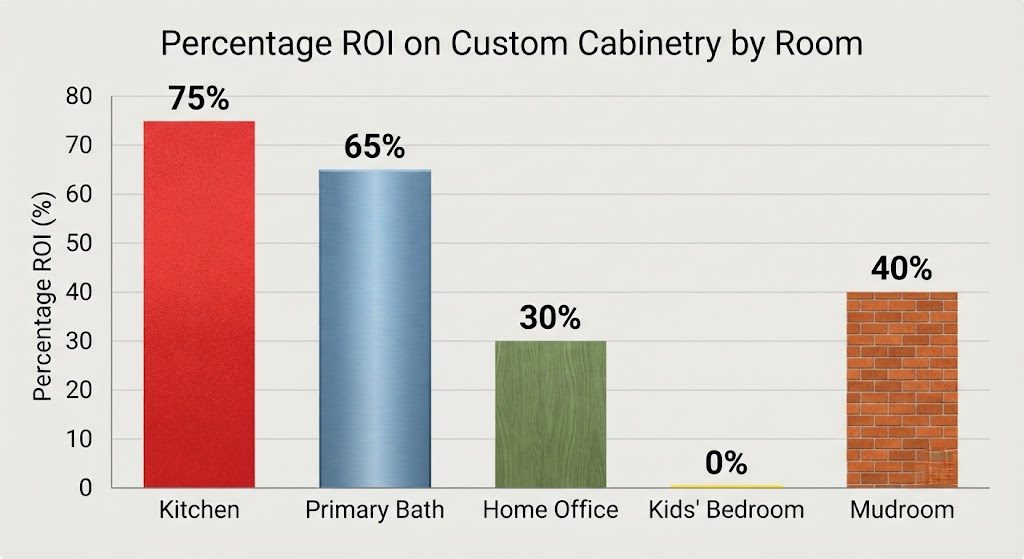
The kitchen is the one room where custom cabinetry reliably returns value at resale. Appraisers and buyers both price a kitchen on the quality of its cabinets. A kitchen with paint-grade maple Shaker cabinets, soft-close hardware, and a catalyzed lacquer finish will appraise as a "fully updated kitchen with custom cabinetry" — a specific designation that adds measurable value compared to "standard builder-grade cabinets" or "IKEA kitchen." The return typically lands between 70 and 80 percent of the cabinet cost in added home value.
The key is restraint. A $65,000 kitchen in a $500,000 house over-improves the neighborhood and won't return its cost. But a $38,000 custom kitchen in that same house — paint-grade perimeter with a single walnut island, good hardware, a built-in pantry wall — lands squarely in the expected range for the neighborhood and returns roughly $27,000 to $30,000 in appraised value. The buyers may not know what a Blum undermount slide is, but they feel the difference when they open a drawer, and they pay for that feeling.
Primary Bathrooms: The Close Second
A custom primary bathroom vanity with a wall-to-wall mirror cabinet, deep drawers with dividers, and a conversion varnish finish returns roughly 60 to 70 percent of its cost. The bathroom is the second-most-scrutinized room in a home sale, and a built-in vanity that eliminates the need for a freestanding linen cabinet makes the room feel larger and more functional. The appraisal bump comes from "updated primary bath" designation, which triggers a value adjustment comparable to a kitchen update, though typically at a slightly lower percentage.
The caveat: the vanity must look like it belongs in the house. A hyper-modern rift-sawn white oak floating vanity in a traditional colonial reads as a mismatch, and buyers price that friction into their offer. Match the cabinet style to the house's architecture, and the vanity adds value; fight the architecture, and it adds buyer hesitation.
Kids' Bedrooms: The Zero-Return Zone
A custom built-in desk, bookcase, and closet system in a child's bedroom costs between $5,000 and $10,000 and returns effectively nothing at resale. The appraiser counts it as a bedroom, not an upgraded bedroom, because built-ins in secondary bedrooms are too specific to the current family's needs. A buyer with toddlers doesn't want a built-in desk sized for a ten-year-old. A buyer with teenagers doesn't want kindergarten-height cubbies. The cabinetry becomes a liability — something to tear out, not something to pay extra for.
That doesn't mean you shouldn't build it. If you'll use it for ten years and the daily value justifies the cost, build it. But don't count it as an investment. It's consumption, like a vacation or a new sofa, and the resale math doesn't apply.
The Home Office and Mudroom: The Wild Cards
A home office built-in returns value only if it's generic enough to be converted into a guest room closet or a media wall. A desk that cantilevers from a bookcase wall is fine; a built-in with a fixed monitor mount and a custom keyboard tray sized for a specific chair is too specific. Keep office built-ins convertible, and they hold roughly 30 percent of their cost at resale.
Mudrooms sit in the middle. A well-built mudroom with a bench, cubbies, and coat storage in a family-oriented neighborhood returns about 40 percent of its cost. Buyers with kids and dogs see it and want it. Buyers without kids see it and wonder what they'd do with it. The return depends on the buyer pool, which makes it the hardest room to predict.
The smartest approach to cabinetry ROI is to invest heavily in the kitchen and primary bath — the two rooms every buyer cares about — and build the rest for your own use. The daily value of a well-organized kid's closet or a functional mudroom is real, even if it doesn't show up on an appraisal report. Just don't confuse the two kinds of return.





No comments yet — grab the first one.