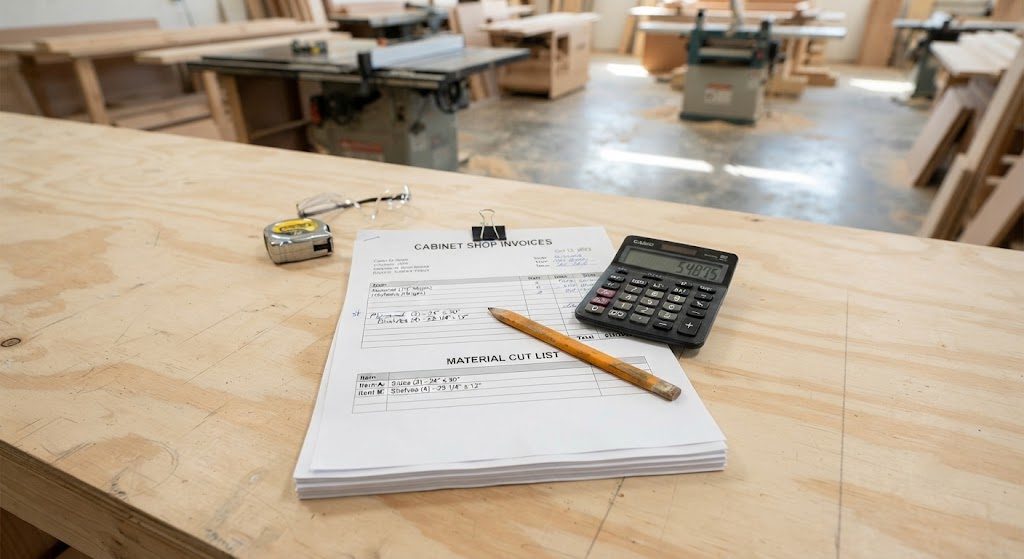
The Real Numbers, Not a Showroom Quote
When a homeowner asks me what custom cabinetry costs, they usually get a shrug from a designer and a vague range from a contractor. Here, you'll get actual numbers. Over the last twelve months, Walker Millwork completed three whole-home projects at different scope levels. All are in the Puget Sound region, all reflect 2026 material and labor pricing, and all are detailed below with their primary cost drivers. These are not entry-level builder-grade packages; they're custom, scribed-to-the-wall, built-to-last cabinetry.
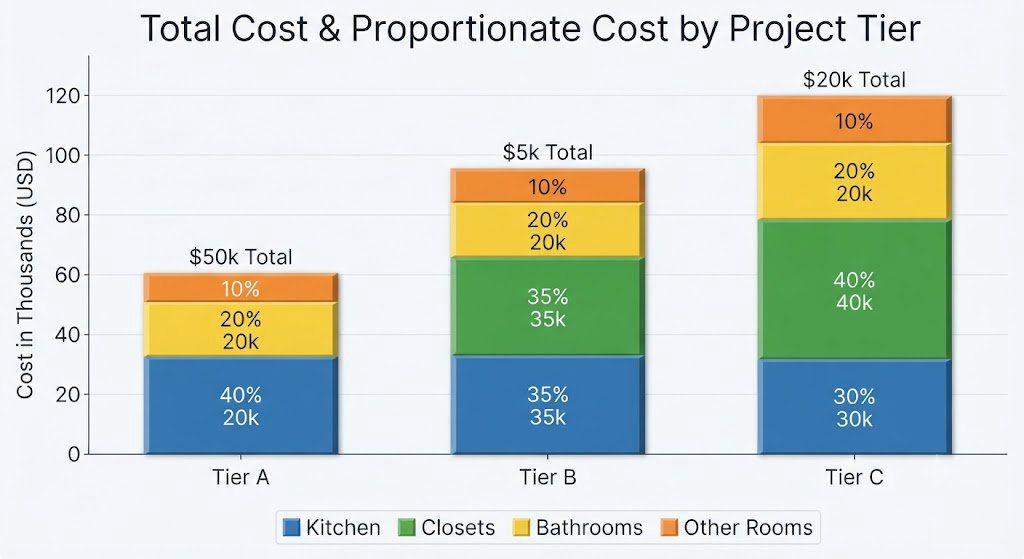
Project A: The Essential Whole-Home Package — $42,800
This 1,800-square-foot Seattle bungalow needed core storage: a kitchen, a single bathroom vanity, and a modest mudroom bench. The kitchen ran 14 linear feet of base and wall cabinets in paint-grade maple with Shaker doors, soft-close Blum hinges and drawer slides, and a quartz countertop installed by others. Cabinetry materials and labor for the kitchen came to $21,400. The bathroom vanity — 60 inches wide, two drawers, one door, paint-grade — came to $4,200. The mudroom built-in, a 5-foot bench with three open cubbies and a coat rod above, cost $3,600. The remaining balance covered design time, shop drawings, delivery, and installation. No exotic woods, no complex lighting integration. Just good cabinets where the house needed them most.
Project B: The Expanded Mid-Range — $94,500
A 2,600-square-foot mid-century remodel in Bellevue added a primary suite closet and a home office to the kitchen and bathroom scope. The kitchen alone was $38,000: rift-sawn white oak island with a stain-grade finish, painted perimeter cabinets, a 9-foot island with a waterfall end panel, and a full-height pantry wall with rollout shelves. The walk-in closet system — maple veneer carcase, solid maple drawer boxes, tilted shoe shelves, and valet rods — added $14,800. The home office built-in, with a desk, bookcases, and concealed technology cabinet, came to $10,200. Two bathroom vanities — one master, one guest — added $12,500 combined. The rest covered a mudroom bench and coat storage, shop drawings, and installation labor. This is the tier where material choices start to matter: the rift-sawn white oak alone added $6,200 over paint-grade maple for the same island footprint.
Project C: The Full-Scope Whole-Home Build — $185,000
A 3,400-square-foot new construction in Queen Anne, designed in collaboration with an architect, built cabinetry into every room: kitchen, butler's pantry, five bathroom vanities, a home office, a media wall, a mudroom with six lockers, a laundry room folding station, and a primary closet the size of a small bedroom. The kitchen and butler's pantry combined for $52,000 in walnut and painted maple. The primary closet, with its island dresser, glass-front sweater drawers, and integrated LED lighting, cost $22,000. The mudroom lockers — solid maple frames with ventilated shoe cubbies, charging drawers, and overhead bins — came to $14,800. The remaining rooms filled out the balance, with hardware upgrades (Blum Legrabox drawer systems in the kitchen and primary bath) adding roughly $4,500 over standard Tandem slides. This project represents the upper end of what a whole-home scope looks like before you enter true luxury territory with exotic veneers and motorized hardware.
What Drives the Cost Up or Down
Every project has four levers: material grade, hardware tier, scope breadth, and finish complexity. Choosing paint-grade maple over walnut saves 40 percent on door and face frame material. Specifying Blum Tandem slides instead of Legrabox saves $35 per drawer. Limiting built-ins to the kitchen and primary suite instead of every room cuts the scope by half. And a single-species, single-finish palette reduces finishing labor by eliminating color matching and spray-gun changeovers. The $42,800 project and the $185,000 project use the same joinery standards and the same shop; the difference is entirely in how many rooms and what materials.





No comments yet — grab the first one.