If you are searching for kitchen remodel and cost information, you probably want something more useful than a national average pulled from a glossy remodeling article. You want to know where the money goes, which choices affect the total, and whether custom cabinetry is justified in your actual house. After nearly two decades in cabinet shops, I have learned that a kitchen budget becomes manageable when every line item has a job.
A modest kitchen refresh can land around $20,000 to $35,000. A full renovation with new cabinets, counters, flooring, lighting, and appliances often reaches $50,000 to $90,000. High-end projects with structural changes and fully custom millwork can pass $120,000. Those are planning ranges, not bids, but they provide a useful starting point for kitchen remodel and cost conversations.
What a Kitchen Remodel Really Includes
The first mistake homeowners make is treating cabinets as the whole project. In a typical 10-by-12-foot kitchen, cabinetry may account for $15,000 to $35,000, depending on construction and finish. Installation can add $3,000 to $8,000. Countertops often run $3,000 to $7,000, while plumbing, electrical work, painting, trim, and permits fill in the edges.
Appliances create another wide swing. A practical package from brands such as Bosch, KitchenAid, or GE might total $5,000 to $12,000. Professional-style ranges, integrated refrigerators, and panel-ready dishwashers can push that number much higher. Moving a sink or range also costs more than replacing one in the same location because walls and floors must be opened.
For a kitchen remodel and cost worksheet, separate fixed project costs from selections. Design, demolition, delivery, installation, and permits are relatively difficult to reduce after work starts. Cabinet door style, hardware, countertop material, and appliance level are the areas where you can make deliberate trade-offs.
Cabinet Construction Is the Biggest Cost Lever
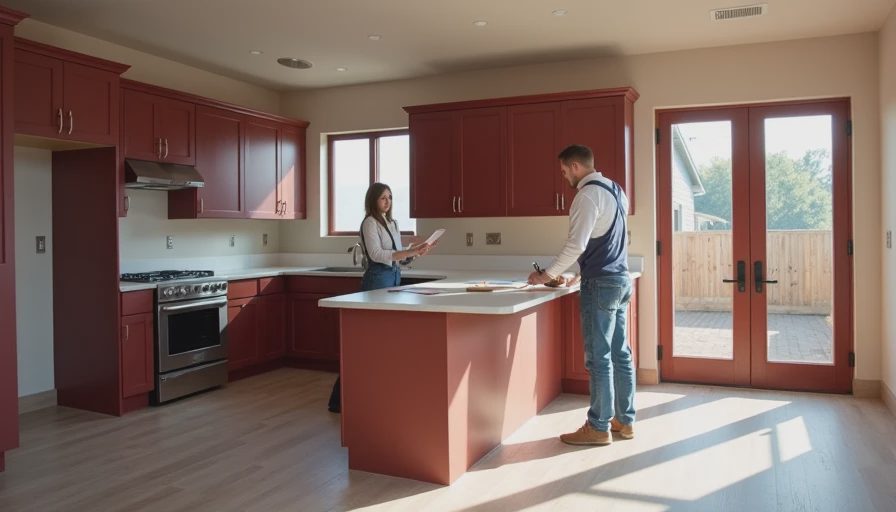
There is a real difference between a cabinet box made from 3/8-inch particleboard and one built from 3/4-inch plywood with hardwood edging. That does not mean every homeowner needs the most expensive box. It means you should understand what you are buying before comparing prices.
Stock cabinets are manufactured in standard widths and are usually the least expensive route. They can be a sensible choice for a rental, a starter home, or a layout that already fits standard modules. Semi-custom cabinets offer more width, depth, finish, and accessory options. Fully custom cabinets are built to the room, which matters when walls are out of square, ceilings vary, or storage needs are unusually specific.
In my shop, custom pricing rises because of engineering, shop drawings, finishing, delivery, and fitting—not because a cabinetmaker simply adds a luxury tax. A tall pantry that follows a crooked wall may require scribed fillers, shaped panels, and additional installation time. That work is invisible in a showroom but valuable in the finished room.
Where Custom Cabinetry Earns Its Keep
Custom cabinetry is not automatically the right answer for every kitchen remodel and cost plan. If a standard 36-inch base cabinet fits cleanly between two walls, buying that cabinet can be perfectly rational. I would rather see a homeowner spend well on a durable, well-installed semi-custom kitchen than stretch beyond the budget for the word “custom.”
Custom work earns its keep when the room has awkward corners, a narrow passage, unusually tall ceilings, or storage demands that standard boxes cannot solve. A 14-inch-deep pantry can preserve a walkway while holding cans and small appliances. A drawer stack sized around cookware can eliminate wasted vertical space. A refrigerator surround can turn a freestanding appliance into part of the architecture.
The useful question is not whether custom costs more. It does. The useful question is whether the extra storage, fit, and visual continuity will matter every day for the next ten or fifteen years.
Materials and Finishes That Change the Number
Paint-grade maple doors, clear-coated white oak, rift-sawn oak, and walnut each carry different material and finishing costs. A simple slab door generally takes less labor than a five-piece door with a beaded center panel. Flush inset construction takes more precision than full overlay because the gaps must remain consistent across the entire run.
For a kitchen remodel and cost estimate, ask whether the quote includes the finish you expect. Factory-applied conversion varnish, for example, is not the same as a quick field coat of paint. Ask about drawer construction too. A 5/8-inch maple dovetail drawer with undermount soft-close slides costs more than a stapled particleboard drawer, but it also tolerates years of daily use better.
Hardware is another quiet budget item. Pulls may cost $6 each or $40 each, and a kitchen with thirty pieces of hardware makes that difference visible. Blum and Salice undermount systems are common professional choices, but the exact model and load rating should be listed in the proposal rather than implied.
A Better Way to Build the Budget
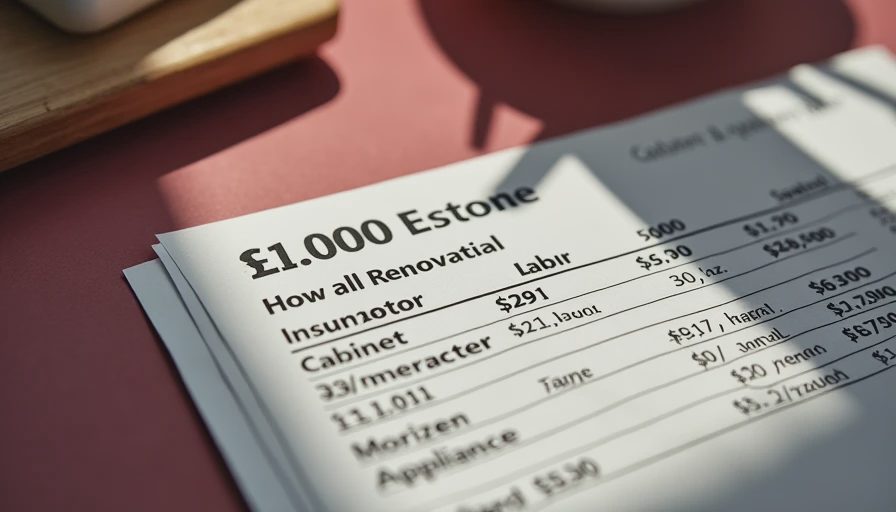
Start with the room constraints before shopping for finishes. Measure ceiling height, door swings, window locations, appliance openings, and the distance between work surfaces. Then decide whether the layout stays in place. Keeping plumbing and electrical locations can save several thousand dollars, while removing a wall or relocating a gas line introduces design, engineering, and inspection costs.
Next, divide the budget into three levels: required, useful, and decorative. Required items include safe electrical work, sound cabinet installation, ventilation, and a countertop that suits the cabinets. Useful items might include a pull-out trash cabinet, deep drawers, tray storage, or a pantry. Decorative items include specialty glass, fluted panels, expensive knobs, and elaborate crown molding.
That order protects the project when prices move. It is better to install strong drawer boxes and adequate lighting before spending $2,000 on decorative panels. Reserve at least 10 percent for surprises such as water damage behind a sink cabinet, subfloor repairs, or a wall that is not plumb.
Comparing Quotes Without Comparing Apples to Oranges
When reviewing kitchen remodel and cost proposals, ask each contractor to describe demolition, cabinet construction, countertop thickness, hardware, installation, finish work, and cleanup. A low quote may exclude delivery, fillers, panels, crown molding, or appliance installation. Another quote may include them and therefore look expensive at first glance.
Request a cabinet elevation or shop drawing before approving the order. It should show appliance panels, filler widths, drawer locations, and the relationship between upper cabinets and windows. A drawing catches a blocked outlet or a refrigerator door conflict while changes are still cheap. Once cabinets are ordered, a small correction can become a restocking fee and a new installation date.
A sound proposal also explains payment stages, lead times, warranty coverage, and who handles damaged parts. Clear paperwork is not bureaucracy; it is how a complicated sequence stays accountable.
The Practical Bottom Line
The most reliable kitchen remodel and cost plan starts with function, not a catalog. Spend first on a layout that works, cabinet boxes and drawers that can take daily use, proper installation, and lighting that makes the work surfaces useful. Then choose the door style, wood species, counters, and hardware that fit the remaining number.
For many homeowners, $35,000 to $60,000 is a realistic middle ground for a substantial kitchen without major structural work. A careful stock or semi-custom plan can come in below that range; a fully custom kitchen with premium appliances and detailed millwork can rise well above it. Get multiple detailed proposals, keep the scope written down, and make each upgrade explain its value.
A good kitchen does not need to look expensive from across the room. It needs doors that stay aligned, drawers that glide under load, sensible storage, and joints that hold up after years of opening and closing. That is the part of the kitchen remodel and cost equation worth paying for.





No comments yet — grab the first one.