12 inch wall cabinets are useful when a standard-depth cabinet would crowd a walkway, cover a window, or make a small room feel boxed in. They are not simply undersized kitchen cabinets. Used deliberately, shallow boxes can hold dishes, cleaning supplies, books, linens, and everyday clutter while preserving valuable floor and elbow room. The important part is matching the cabinet depth to the job rather than treating every wall as an opportunity for the deepest storage possible.
I have built shallow cabinetry for narrow Seattle kitchens, mudrooms, laundry rooms, and home offices. The best results came from starting with the objects being stored, then drawing the cabinet around them. That approach prevents the common mistake of buying a cabinet first and discovering that plates, appliance cords, or folded towels do not fit.
What fits inside a 12-inch cabinet?
A 12-inch-deep cabinet has less usable space than its outside measurement suggests. A 3/4-inch-thick side panel on each side, a 1/2-inch back, and a door or face frame reduce the interior depth. Depending on construction, you may have roughly 10 to 10 1/2 inches of clear space. That is plenty for many items, but not everything.
These cabinets work well for dinner plates stored vertically, drinking glasses, mugs, canned goods, spices, small appliances, toiletries, folded hand towels, office supplies, and paperback books. They are also effective above a washer and dryer, where a shallow cabinet can keep detergent within reach without projecting too far into the room.
They are less suitable for large mixing bowls, deep stockpots, oversized serving platters, and bulky countertop appliances. A typical dinner plate can fit, but measure the plate and account for shelf pins, doors, and any interior dividers. In a kitchen, I often specify one deeper base cabinet for pots and pans, then use shallow uppers for lighter daily-use items.
Where 12 inch wall cabinets make the most sense
The kitchen is the obvious location, but it is not the only one. In a hallway, 12 inch wall cabinets can create a useful linen station without narrowing the passage as much as a 24-inch-deep closet. In a home office, they hold paper, binders, chargers, and printer supplies above a desk. In a bathroom, they can store spare towels and toiletries while leaving the vanity wall visually lighter.
Laundry rooms benefit from shallow storage because doors, baskets, and a person standing at the machines already compete for space. A 12-inch cabinet above the folding counter provides a home for stain remover, clothespins, and cleaning products. For safety, household chemicals should be stored where young children cannot reach them, and cabinet hardware should suit the room's moisture level.
In an entry, these cabinets can serve as an upper layer above a bench or a row of hooks. They are good for hats, gloves, dog supplies, and seasonal accessories. I would not use them as a substitute for a deep coat closet, but they can remove the small items that make an entry bench look permanently disorganized.
Construction details that affect usable space
Stock cabinets are usually built from furniture-grade plywood, particleboard, or medium-density fiberboard, depending on the manufacturer and product line. None of those materials is automatically wrong. The grade, edge treatment, fasteners, finish, and installation matter more than the marketing label.
For a painted built-in, 3/4-inch MDF doors can produce a smooth, stable surface, while a plywood case keeps weight manageable and provides dependable screw holding. For a clear finish, maple, white oak, or birch plywood may be appropriate, but the veneer quality and edge banding deserve inspection. A 1/2-inch plywood back set into a dado is stronger and cleaner than a thin stapled back, especially when the cabinet will be loaded with dishes.
Shelves need attention too. A 12-inch-wide shelf may be fine in 3/4-inch plywood, but a long run of shelves can sag under books or canned goods. Adjustable shelves on 32mm system holes make the cabinet easier to change later. For heavy contents, I prefer a fixed shelf or a thicker front edge rather than relying on a decorative shelf pin alone.
Doors, drawers, and access
A shallow cabinet can still be awkward if the opening is poorly planned. Hinged doors are economical and give full access, but an open door can interfere with a walkway. In a narrow corridor, lift-up doors or sliding doors may be better, although their hardware costs more and they do not provide the same immediate access.
Drawers are attractive for spices, office supplies, and bathroom items because they bring the contents forward. However, drawer boxes consume several inches of vertical space and require quality slides. A 12-inch-deep drawer is not the same as a 12-inch-deep cabinet; the drawer interior will be smaller after the front, box, slide, and required clearances are deducted.
For most kitchens, I like a combination: doors for stacked dishes or glasses, shallow drawers for utensils and small tools, and a small open niche for items used several times a day. That mix keeps the cabinet practical instead of turning every storage problem into a door-and-shelf problem.
Installation and layout checks
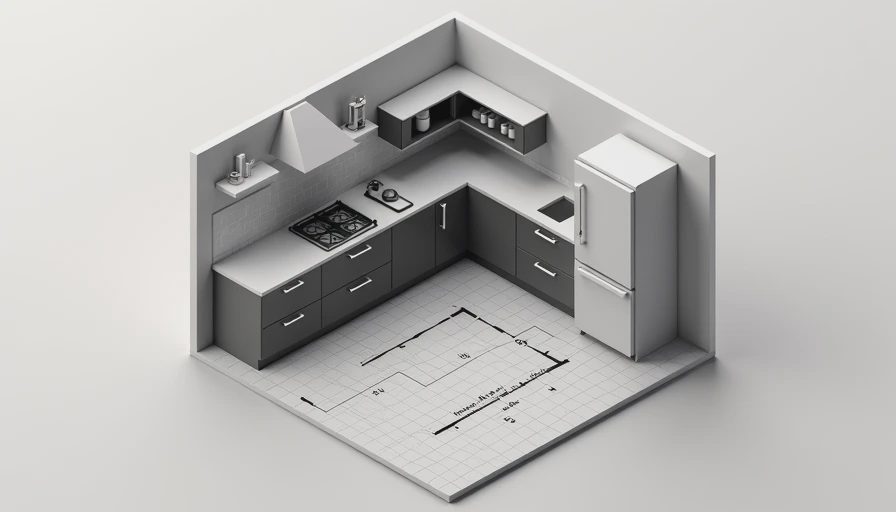
Before ordering, mark the proposed cabinet footprint on the wall with painter's tape. Open nearby doors, pull out drawers, and walk through the room carrying the objects the cabinet will hold. This simple test catches conflicts that a floor plan can hide.
Locate studs and identify electrical boxes, plumbing, vents, and trim. A wall cabinet should be fastened through a solid hanging rail or cabinet back into structural framing, not merely screwed into drywall anchors. In older homes, walls are rarely perfectly plumb. Scribing the side panels or adding a finished filler can produce a much cleaner fit than forcing a square cabinet against a crooked wall.
Measure ceiling height, backsplash height, window casing, and adjacent moldings. A cabinet that is technically 12 inches deep can still look clumsy if its top dies into a sloped ceiling or its door collides with casing. Good built-in work makes those transitions intentional, often with a light rail, crown detail, side panel, or carefully sized filler.
What 12 inch wall cabinets cost
For a basic ready-to-assemble unit, expect a relatively modest price, often around $100 to $300 depending on width, finish, and hardware. Assembled semi-custom cabinets commonly move into the $300 to $800 range per box. Installation, fillers, end panels, trim, delivery, and finishing can add substantially to the project total.
A custom cabinet shop may charge roughly $800 to $2,000 or more for a finished shallow cabinet installation, depending on dimensions, paint-grade or wood materials, drawer hardware, scribing, and site conditions. A short run with several cabinets can cost more than a single box because measuring, finishing, delivery, and installation are real fixed costs.
For homeowners comparing 12 inch wall cabinets, the useful question is not only the price per box. Ask what is included: finished ends, soft-close hinges, finished interiors, installation, wall repairs, and trim. A low cabinet price can become less attractive once those pieces are added separately.
A practical buying checklist
Start by listing the items you want to store and measuring the tallest, widest, and deepest examples. Decide whether the cabinet needs doors, drawers, or open access. Confirm the clear interior dimension, not just the advertised outside depth. Then mark the wall, check door swings, and locate studs and services.
Choose a material that suits the room. Painted MDF doors can be sensible in a dry office, while plywood construction and a durable finish are better choices for hard-working kitchen storage. Specify adjustable shelves where contents are likely to change, and choose hinges and slides with replacement parts available.
Finally, compare the complete installed price. Stock 12 inch wall cabinets are sensible for a straightforward utility area. Custom work earns its price when the wall is out of square, the run must stop around a window, or the cabinet needs to connect cleanly with a bench, pantry, or bookcase. Measure carefully, and shallow storage will feel intentional rather than like a compromise.





No comments yet — grab the first one.